UAE Hospitals’ Pneumatic Tube Systems: Design, Infection Prevention & Smart Logistics Planning Guide
A pneumatic tube system in the UAE is a mechanized transport network that moves selected laboratory specimens, pharmaceuticals, documents, and medical supplies via controlled airflow between hospital stations. For new healthcare construction and modernization projects in Dubai, Abu Dhabi, and Sharjah, pneumatic tube systems (PTS) require coordinated planning across clinical operations, central laboratory management, biomedical engineering, infection prevention, and Mechanical, Electrical, and Plumbing (MEP) engineering disciplines.
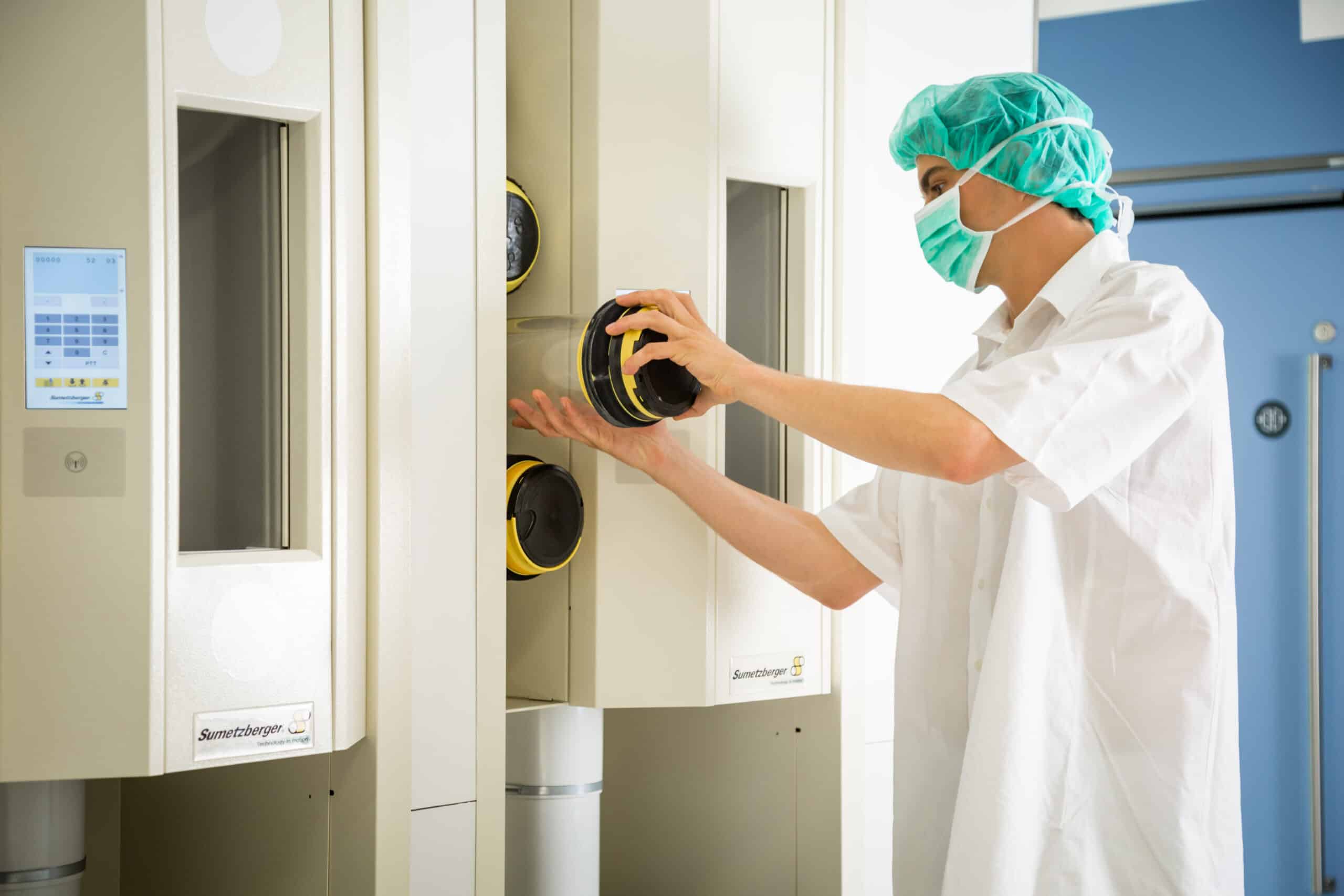
Basic system architecture comprises low-friction tubing, variable-speed blowers, electromechanical routing diverters, ergonomically designed sending and receiving stations, leak-proof transport carriers, and computerized control systems. Key engineering considerations include:
- Clinical Logistics & Ergonomics: Strategic station placement across acute and inpatient departments.
- Carrier Sizing & Payload Rules: Determining allowable specimen categories, volumes, and weight thresholds.
- Pneumatic Pressure & Velocity Control: Ensuring smooth acceleration to preserve biological sample integrity.
- Infection Prevention & Containment: Preventing cross-contamination and managing air pathways in controlled clinical areas.
- MEP Coordination & Fire Compartmentalization: Maintaining fire-rated barrier integrity and acoustic decoupling.
- Monitoring & Serviceability: SCADA-style software tracking, audit logging, and preventive maintenance accessibility.
Ultravision Medical Equipment Trading LLC offers advanced Sumetzberger pneumatic tube systems as part of its specialized hospital logistics and healthcare engineering portfolio in the UAE.
1. Applications for Clinical Work and Hospital Logistics Flows
Laboratory Specimen Transport
A pneumatic tube network delivers an automated, mechanized transport solution for transferring clinical laboratory specimens from patient wards, ICUs, and emergency departments directly into central laboratories. It replaces the physical footsteps required for manual courier transit.
However, the overall impact on clinical laboratory Turnaround Time (TAT) depends on multiple interrelated workflow factors: station placement, network traffic density, specimen accessioning, centrifugation, and analytical processing protocols. Hospital laboratories must clearly differentiate pure specimen transport time from total analytical turnaround time when evaluating system performance.
Blood Bank Transport
Transporting selected blood products via a pneumatic network is viable when the hospital blood bank has formally validated the process. Transport suitability depends strictly on the blood component type (packed red cells, plasma, platelets), primary and secondary packaging, mechanical cushioning, pneumatic shear forces, and thermal exposure limits. The hospital blood bank must establish a clear protocol defining which blood products are authorized for pneumatic dispatch and which require dedicated manual transport.
Pharmacy and Medical Materials Transport
Hospital pharmacies frequently utilize pneumatic tube networks for the on-demand distribution of eligible medications and clinical consumables. Suitability is dictated by departmental pharmacy protocols—particularly regarding temperature-sensitive biologics, fragile glass ampoules, hazardous chemotherapy agents, and controlled substances. Where necessary, electronic station access control (PIN or RFID badge authorization) and automated transaction logging should be enforced.
2. PTS Design and Engineering Components
A reliable hospital PTS operates under real-time microprocessor control to coordinate pneumatic, mechanical, and electrical subsystems.
Pneumatic Blowers and Airflow Management
The pneumatic tube system utilizes pressure differentials to propel carriers throughout the pipeline network. Depending on the installation architecture, three-phase blowers can operate in positive pressure (push), negative pressure (vacuum), or bidirectional modes. Crucial engineering parameters include:
- Operating positive and negative pressure ranges.
- Variable Frequency Drive (VFD) speed modulation for smooth carrier acceleration and deceleration.
- Motor electrical characteristics, continuous duty cycle, and thermal protection.
- Acoustic sound levels and plant room mechanical ventilation.
- Clear physical clearances for preventive maintenance and filter servicing.
Routing Diverters
Electromechanical diverters direct carriers between intersecting branches of the transport network. Under supervisory computer control, diverters shift internal pipe segments into exact mechanical alignment. The engineering layout must incorporate sensor feedback verification, optical position monitoring, accessible service hatches, and defined manual carrier retrieval procedures in the event of an in-transit fault.
Sending and Receiving Stations
Stations provide the primary human-machine interface for clinical staff, facilitating carrier dispatch, arrival notification, loading, and retrieval. Depending on department throughput, stations can feature automated carrier storage, automatic unloading into padded receiving bins, user badge authentication, and priority queue dispatch. Station locations should be evaluated for workflow isolation, acoustic impact, and infection prevention zoning.
Central Control and SCADA-Style Monitoring
Computer-controlled systems manage routing priority, blower speeds, diverter switching, and carrier motion in real time. Systems such as the Sumetzberger hospital product line incorporate comprehensive supervisory software providing 3D visual network maps, live carrier tracking, transport event logs, station availability metrics, and alarm notifications. Interface capabilities with Hospital Information Systems (HIS) and Laboratory Information Systems (LIS) enhance operational traceability.
3. Infection Control and Laboratory Specimen Integrity
Preserving biological sample integrity and adhering to hospital infection control standards are foundational to clinical PTS engineering.
Transport-Induced Hemolysis Prevention
Mechanical forces during pneumatic flight—acceleration, sudden deceleration, vibrations, and impact shocks—can induce in vitro red blood cell hemolysis, altering diagnostic concentrations of potassium, lactate dehydrogenase (LDH), and aspartate aminotransferase.
Healthcare facilities must never assume that all blood collection tubes or diagnostic tests remain unaffected by pneumatic travel. Laboratory leadership should execute a structured method comparison study evaluating pneumatic transport against manual courier controls prior to clinical commissioning. Critical validation metrics include:
- Free hemoglobin / Hemolysis Index (H-index) monitoring.
- Potassium concentration stability.
- Lactate dehydrogenase (LDH) activity.
- Primary specimen tube and stopper seal integrity.
- Specimen rejection rates across routine and complex transport routes.
For clinical validation methodologies, reference published research at PubMed: Parameters for Validating a Hospital Pneumatic Tube System.
Carrier Containment and Disinfection Protocols
Carrier handling forms an integral element of hospital infection prevention. Facilities must define rigorous packaging, inspection, and sanitization schedules:
- Securing primary sample caps and deploying leak-proof secondary containment bags.
- Verifying carrier polycarbonate shell compatibility with approved hospital chemical disinfectants.
- Maintaining robust, replaceable sealing gaskets to contain accidental internal fluid spills.
- Establishing clear emergency protocols for decontamination if a leaking specimen is detected.
Airflow Control in Controlled Clinical Environments
When a pneumatic tube network serves operating suites, intensive care units, or airborne infection isolation rooms, engineering teams must evaluate room differential pressure relationships and potential air displacement pathways. Infection prevention officers and HVAC engineers should review station locations, shaft penetrations, and blower exhaust paths. High-efficiency particulate air (HEPA) filtration on exhaust lines should be evaluated based on formal project infection control risk assessments rather than unverified generic assumptions.
JCI and Hospital Quality Management Alignment
Hospitals operating under the Joint Commission International (JCI) framework must incorporate pneumatic tube systems into their facility management, specimen handling, infection prevention, and biomedical maintenance plans. JCI accreditation validates the healthcare organization's comprehensive operational quality; it represents hospital-wide procedural compliance rather than an equipment-specific certification.
4. Facility MEP Planning and Installation Requirements
Coordinating pneumatic tube routing with architectural and MEP infrastructure early in the design phase prevents costly structural conflicts.
Pipe Diameter Selection: 110 mm vs. 160 mm
Standard Sumetzberger hospital networks utilize nominal 110 mm and 160 mm system calibers. The selected nominal size directly governs carrier internal capacity, usable payload volume, bending radii, and required ceiling void envelope:
| Engineering Parameter | 110 mm Nominal System | 160 mm Nominal System |
|---|---|---|
| Nominal Size Category | 110 mm outer diameter pipeline | 160 mm outer diameter pipeline |
| Carrier Loading Volume | Compact carrier format (smaller internal bore) | High-capacity carrier format (larger internal bore) |
| Typical Clinical Cargo | Routine laboratory specimens, blood tubes, small pharmacy items | Multi-unit blood bags, bulk IV pharmaceuticals, surgical specimens |
| Maximum Usable Payload | Defined by manufacturer-approved carrier specifications | Defined by manufacturer-approved carrier specifications |
| Pneumatic Velocity Profile | Modulated via VFD control based on route and payload | Modulated via VFD control based on route and payload |
| Shaft & Ceiling Void Envelope | Compact pipeline envelope; fits tighter ceiling plenums | Requires larger vertical riser shafts and ceiling clearances |
| Station Dimensions | Slim stations compatible with 110 mm carrier format | Larger stations compatible with 160 mm carrier format |
| Primary Selection Criterion | Standard lab specimen workflow & space-constrained routes | High-volume blood bank, central pharmacy & heavy cargo transfer |
Vertical Risers and Pipe Routing
Network routing requires tight MEP coordination:
- Dedicated space allocation in vertical service shafts and false ceilings.
- Strict adherence to OEM-specified bending radii (wide sweeps) to prevent carrier deceleration jams.
- Anti-vibration pipe clamps and acoustic insulation when passing adjacent to patient bedrooms or clinical exam areas.
- Strategic access hatches adjacent to all diverter switches and inspection points for scheduled maintenance.
Fire Compartmentation and Protection
Whenever pneumatic tubing penetrates fire-rated floor slabs or compartment walls, the fire resistance rating of the barrier must remain fully intact. Fire protection measures must be engineered in coordination with fire-safety consultants, equipment manufacturers, and UAE Civil Defence regulations using certified firestop collars or intumescent wraps. Standard HVAC fire dampers must never be installed inside pneumatic carrier tubes.
Electrical Power Infrastructure and Emergency Recovery
Blower units, system controllers, diverters, and station panels require dedicated electrical circuits with appropriate overcurrent protection and low-impedance grounding. Central controllers should be supported by an Uninterruptible Power Supply (UPS) with automated carrier homing routines to facilitate rapid recovery during municipal power fluctuations.
5. Preventive Maintenance and System Reliability
A hospital pneumatic tube system must operate under a structured Planned Preventive Maintenance (PPM) regime covering mechanical, pneumatic, electrical, and software components. Ultravision Medical Equipment Trading LLC delivers specialized preventive maintenance, system audits, and engineering technical support across the UAE.
Core Inspection and Maintenance Tasks
- Blowers: Operating pressure and vacuum measurement, airflow verification, intake air filter servicing, motor thermal checks, and vibration analysis.
- Diverters: Mechanical positioning alignment, optical position sensor calibration, actuator cycle checks, and physical wear inspection.
- Carriers: Latch mechanism inspection, guide ring wear measurement, sealing gasket elasticity checks, and RFID tag verification.
- Stations: Receiving cushion test, dispatch gate interlock verification, user interface functionality, and arrival optical sensors.
- Control Systems: Communications diagnostic checks, network latency monitoring, fault log analysis, and system database backups.
Planned Preventive Maintenance (PPM) vs. Corrective Repairs
| System Component | Planned Preventive Maintenance (PPM) | Corrective Emergency Intervention |
|---|---|---|
| Three-Phase Blowers | Airflow measurement, filter inspection, motor vibration check | Blower motor repair, VFD drive troubleshooting |
| Routing Diverters | Position sensor alignment, mechanical lubrication, seal audit | Diverter de-jamming, actuator replacement |
| Transport Carriers | Gasket replacement, wear measurement, RFID verification | Damaged carrier retirement, in-line carrier retrieval |
| Stations | Functional arrival test, door interlock check, cushion inspection | Station component repair, display replacement |
| Tubing Network | Visual inspection of accessible joints, hangers, and supports | Obstruction removal, damaged tube section replacement |
| Central Controller | Fault log review, network communication audit, software backup | Control board troubleshooting, system reconfiguration |
6. Seven-Point Hospital Site Readiness Checklist
Prior to signing operational handover documents and entering clinical service, hospital engineering committees should execute this 7-point readiness checklist:
| No. | Verification Area | Required Engineering Action |
|---|---|---|
| 1 | Clinical Workflow | Identify participating departments, payload categories, station placement, and transport priority logic. |
| 2 | System Architecture | Confirm carrier format, 110 mm vs 160 mm pipe layout, routing diverters, and supervisory control specifications. |
| 3 | MEP Integration | Verify vertical risers, ceiling void clearances, support brackets, acoustic decoupling, and maintenance access. |
| 4 | Infection Prevention | Approve specimen packaging, carrier disinfection protocols, leak containment procedures, and clinical transport restrictions. |
| 5 | Electrical Infrastructure | Validate blower power supplies, dedicated grounding, UPS emergency backup, and fault isolation procedures. |
| 6 | Information Technology | Verify network interfaces, RFID user authentication, transport event logging, and LIS/HIS interface readiness. |
| 7 | Commissioning & Handover | Conduct full-line transport tests, specimen clinical validation trials, fault simulation tests, and staff training. |
7. Conclusion: Pneumatic Tube System Planning for UAE Hospitals
Implementing a modern pneumatic tube system in UAE hospitals demands multidisciplinary coordination between healthcare planners, MEP consultants, biomedical engineers, laboratory directors, infection control specialists, and hospital IT teams. Engineering specifications must be grounded in verified transport payloads, clinical specimen validation, structural MEP planning, and structured lifecycle maintenance.
Selecting between a 110 mm and 160 mm system architecture should be guided by actual clinical cargo requirements and manufacturer technical parameters rather than generic assumptions.
Ultravision Medical Equipment Trading LLC provides turnkey Sumetzberger pneumatic tube systems and hospital logistics solutions across Dubai, Abu Dhabi, Sharjah, and the UAE.
For new hospital construction or logistics modernization projects, contact our engineering team today to review your project specifications and site readiness requirements.